

Posted on 25 Feb 2026
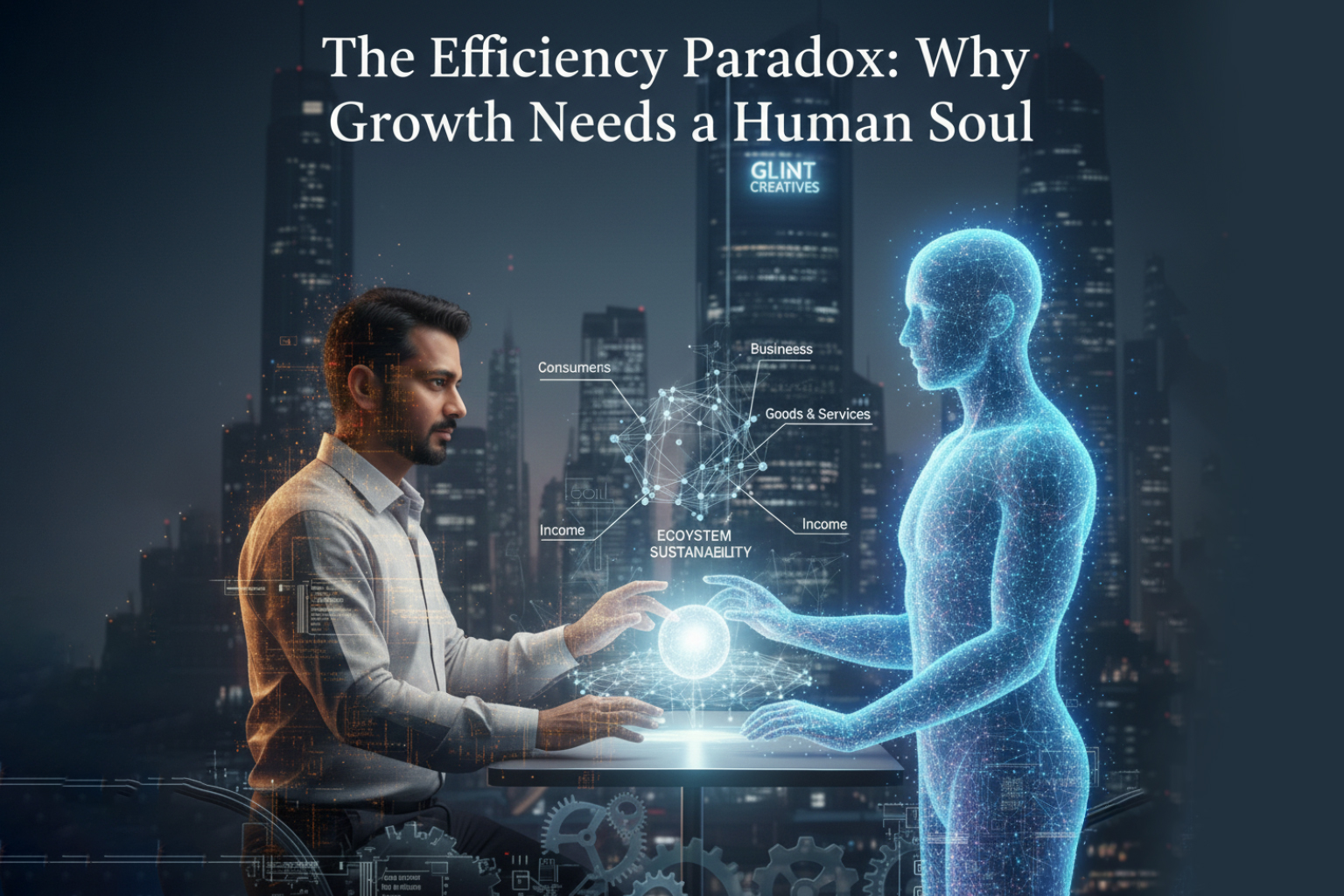
I am a fan of technology. As the MD of a digital agency, I’ve seen how AI can turn a 100-hour project into a 10-hour masterpiece. The speed is intoxicating, and the cost-cutting is a tempting "quick win" for any business. But lately, I’ve been thinking deep—past the spreadsheets and into the heart of our ecosystem.
We are standing at a crossroads similar to the Industrial Revolution, but the speed of this shift is unlike anything humanity has seen.
If we use a tool to do the work of 100 people with only 10, we must ask the most important economic question of our time: What happens to the other 90?
Think about it…
For decades, the software industry hyped growth. Millions of people built careers, bought homes, and fueled the economy with their salaries.
They are the "consumers." If every company suddenly "optimizes" and removes the human element to save costs, who is left to buy the products?
An AI can generate a thousand ads a minute, but an AI cannot buy a car, (and use it) subscribe to a service, or support a local business. If we automate the worker out of a job, we inadvertently automate the customer out of the market. This is the "Oops" moment—an ecosystem collapse where efficiency exists, but demand has evaporated.
I believe growth is necessary, but it must be organized and systematic. Sudden, massive layoffs for the sake of "AI efficiency" create a social shock that the economy cannot absorb quickly enough. At Glint Creatives, my philosophy is different:
We shouldn't be against the tech upgrade—I certainly am not. But we must be "pro-human" in our transition. Growth should serve humanity, not replace it. If we build a world where only the machines work, we will soon find ourselves in a world where nothing moves.
Let’s build a future where we use the "10x" power of AI to create new opportunities for the 90, rather than just leaving them behind.
Because efficiency without a soul is just a hollow machine.
Socials:


 Facebook
  Twitter
  Youtube
  Instagram